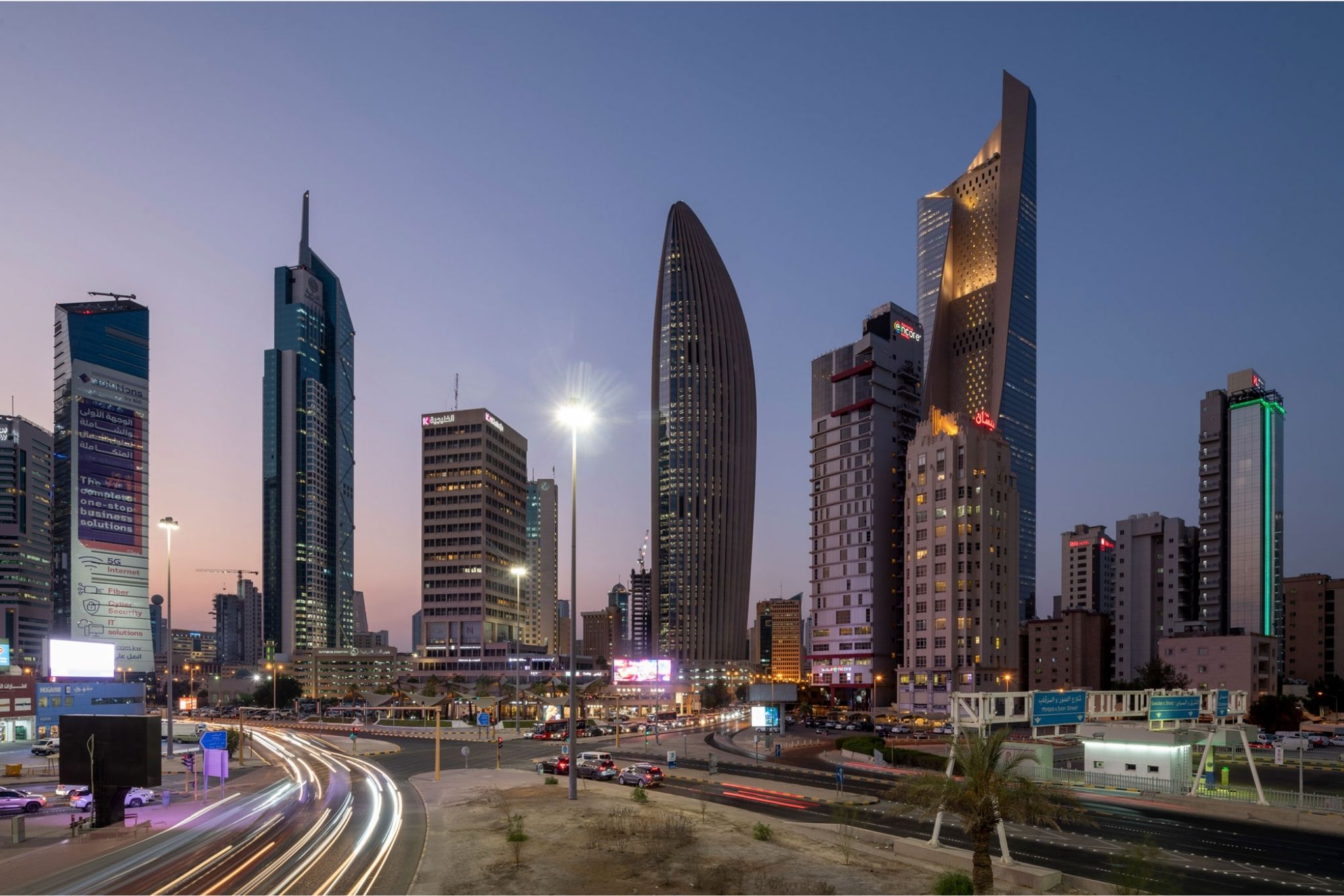
The National Bank of Kuwait’s 2025 Sustainability Report, released earlier this month under the title “Sustainability at the Core: From Strategy to Impact,” revealed a series of notable achievements, as the bank exceeded its interim target for reducing car-bon emissions, made significant strides in sustainable finance, and achieved tangible progress in sustainability governance, according to an analytical study prepared by Mnakh Studies and Research.
Exceeding the emissions target
In 2025, National Bank of Kuwait achieved a 37.35 percent reduction in its operational emissions (Scopes 1 and 2) compared to the 2021 baseline, exceeding its announced interim target of a 25 percent emissions reduction by 2025 by 12 percentage points. Scope 2 emissions - purchased electricity - have cumulatively decreased by 38.92 percent since 2021, while total annual emissions fell by 12.51 percent com-pared to 2024, reaching approximately 26 metric tons of carbon dioxide equivalent. This means an annual reduction equivalent to taking approximately 790 cars off the road for a full year, according to Mnakh’s estimates. Emissions intensity per employee also decreased from 16 tons in 2021 to approximately 10 tons in 2025.
This performance was supported by the Nation-al Bank of Kuwait’s installation of solar panels at 18 branches, which generated a total of 240 kilowatts in 2025. The energy is enough to power eight aver-age-sized homes year-round, according to Mnakh’s estimates, and has prevented 138 tons of emissions. Additionally, the bank upgraded lighting to LED tech-nology in 47 branches and installed Building Energy Management Systems (BEMS) in 43 branches. Water consumption has also decreased by 11.6 percent cumulatively since 2021, following the redesign of the chiller room at the bank’s headquarters.
Sustainable finance
The bank’s sustainable asset portfolio rose to $6.11 billion by the end of 2025, reaching 61 percent of its $10 billion target by 2030. During the year, the bank granted $3.064 billion in sustainable loans, distributed among green loans (61.71 percent), sustainability linked loans (31.18 percent), and social loans (7.65 percent).
Green and social financing in Kuwait also recorded annual growth of 43 percent. In May 2025, the bank published the first allocation and impact report for its $500 million green bond, revealing that 100 percent of its net proceeds of $498,625 million were allocated to eligible green assets totaling $625,44 million.
The bank also arranged Kuwait’s first-ever green loan, worth KD 25 million, for Mabanee Company to finance the implementation of a project in the Sa-bah Al-Ahmad Residential City, which aims to obtain LEED Gold certification.
Sustainability Governance
In 2025, the bank rolled out an ESG assessment framework across all non-retail lending portfolios at the group level to evaluate institutional clients across five risk categories: transition, physical, other environmental, social responsibility and corporate governance.
The bank formally incorporated climate risk into its Internal Capital Adequacy Assessment Process (ICAAP) as a Pillar 2 risk, using the Delta ECL model and NGFS network scenarios, and published its first TCFD-aligned report in April 2025.
The bank did not record any incidents of corruption, money laundering, bribery, or reports of misconduct during the past year, nor were there any data breaches.
Human capital
The total number of employees at the National Bank of Kuwait Group reached 2,456 in 2025, with women accounting for 42.4 percent of the workforce and holding 27.2 percent of leadership positions. The bank maintained a Kuwaiti nationalization rate of 77.4 percent of the total workforce and 71.3 percent in senior management.
During the year, the bank provided approximately 83,212 training hours, averaging 33.88 hours per employee, with an investment of KD 1.71 million. The “NBK RISE” women’s leadership program completed its second edition with the participation of 25 female leaders, as part of an academic partnership with IE University, INSEAD and Scotwork. The bank also re-corded zero workplace injuries.
Community investment
The bank spent KD 9,403 million on community development in 2025. The “Bankee” financial education program reached 53,098 students and 11,321 teachers across 104 schools, with an investment exceeding KD 1 million, representing an annual growth rate of 51.9 percent.
At the National Bank of Kuwait Specialized Children’s Hospital, where the bank’s cumulative invest-ment in infrastructure totals KD 30 million - including 19 million for the latest expansion project covering an area of over 22,000 square meters, which, accord-ing to Mnakh’s estimates, is roughly the size of three soccer fields - the pediatric oncology program achieved a 96 percent cure rate for leukemia and a 95 percent cure rate for stem cell transplants, while more than 3,000 children received support in 2025, and 12 peer-reviewed scientific papers were published, cited 43 times in global medical research.
Facilities for small and medium-sized enterprises (SMEs) rose to KD 26.4 million in 2025, with an an-nual growth rate of 5.43 percent, benefiting more than 4,000 companies. The number of active accounts for the “Al-Amal” card, designed for low-wage workers, reached more than 125,000.
Environmental partnerships
In 2024, the National Bank of Kuwait joined the Partnership for Carbon Accounting Financials (PCAF) initiative to calculate financed emissions, becoming the first Kuwaiti bank to do so and one of only 19 institutions in the Middle East. In 2025, its partnership with the recycling company “Omnia” - verified by a third party - diverted 525 tons of plastic from landfills and avoided 1,312.8 tons of carbon dioxide, equivalent to approximately the emissions of 285 cars over a full year, according to an estimate by Manakh. The bank also recycled 120 tons of paper during the year, which is estimated to have saved nearly 2,000 mature trees from being cut down.
The National Bank of Kuwait’s 2025 report was prepared in accordance with the GRI 2021 Standards, SASB, the UNGC Principles, the AccountAbility 1000 Standard, the Kuwait Stock Exchange’s ESG report-ing guidelines and Kuwait Vision 2035. The report received a limited assurance from the British firm FBRH Consultants on GRI disclosures, while the Jordanian firm Ampere verified the emissions inventory in accordance with the international standard ISO 14064-3:2019, issuing an unmodified assurance opinion.
The National Bank of Kuwait’s 2025 Sustainability Report reflects the bank’s transition from the frame-work-building phase to the impact-measuring phase, cementing its position as a leader in Kuwait’s transition toward a low-carbon economy, particularly as it has exceeded its interim emissions reduction target ahead of schedule and doubled its sustainable asset portfolio, and its leadership in launching sustainable financing products and frameworks for the first time in Kuwait.